How Buyers Can Use MLS to Detect “Padding” in Square Footage. Square footage is one of the most powerful numbers in real estate.
It determines:
- Market value
- Comparable selection
- Price per square foot
- Appraisal outcomes
- Tax assessments
- Buyer expectations
And because of that, it’s also one of the most commonly manipulated numbers.
Some sellers and even some agents—intentionally or accidentally—inflate, round up, or outright “pad” the square footage in MLS listings. Sometimes it’s due to a genuine misunderstanding. Sometimes it’s poor measurement methods. But in other cases, it’s strategic—because a few hundred “phantom” square feet can add tens of thousands of dollars to a list price.
That’s why smart buyers (and smart buyer agents) use the MLS not just to view square footage, but to detect whether that number is trustworthy.
This article shows you exactly how to identify padded square footage, what red flags to look for in MLS, and how to use this knowledge to negotiate a better deal—or avoid a costly mistake entirely.
1. First, Understand What Counts as Legitimate Square Footage
Before detecting padding, buyers need to understand what should be counted and what should not.
1.1. Legitimate square footage includes:
- Heated, finished spaces
- Areas above grade (for single-family homes)
- Rooms with proper ceiling height (usually 7 feet or more)
- Rooms accessible through the main interior (not through a garage)
- Permitted additions
1.2. Square footage typically excludes:
- Garages
- Unfinished basements
- Storage rooms without climate control
- Enclosed patios without HVAC
- Unpermitted additions
- Attics without adequate ceiling height
- Outdoor areas (porches, decks, balconies)
- Detached structures (unless the listing specifically adds them separately)
When sellers pad square footage, they usually do it by incorrectly including these excluded areas.
MLS helps buyers detect this by providing details that most people overlook.
2. Compare the MLS Square Footage With Public Records
This is the fastest and easiest way to detect square footage padding.
Most MLS systems automatically pull tax roll data, allowing you to compare:
- MLS living area vs.
- The county recorded the living area.
Red flag #1: Square footage in MLS is significantly higher than in tax records
If MLS says 2,400 sq ft and tax records say 2,000 sq ft, start questioning:
- Was there an addition?
- Was the addition permitted?
- Was the addition finished properly?
- Does the seller count areas that don’t qualify?
Important note:
Tax records are not always accurate—especially for older homes or those with improvements.
But if MLS exceeds public records by more than 10%, there’s a good chance something is off.
3. Examine the Room Count and Layout for Logical Consistency
Square footage should match the layout.
Red flag #2: Room count doesn’t align with the stated square footage
Example:
MLS says 3,500 sq ft,
But the home only shows:
- 3 bedrooms
- Small living room
- Compact kitchen
- No bonus rooms
This is suspicious.
A typical 3,500 sq ft home often includes:
- Large primary suite
- Office or loft
- Formal dining
- Larger common areas
- Walk-in closets
- Possibly a bonus room or flex room
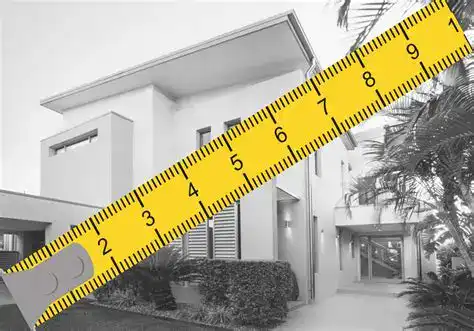
If the layout feels small for the number, the square footage might be padded.
4. Review the Property Photos Carefully
Photos often expose exaggerated square footage claims.
Red flag #3: Photos show small or cramped spaces
If the listing claims 3,000 sq ft but the rooms look tight, narrow, or undersized, something isn’t right.
Look specifically for:
- Hallways that appear unusually narrow
- Bedrooms that barely fit furniture
- Kitchens that look more like 1,500 sq ft homes
- Low or sloped ceilings
- Converted attic rooms used as bedrooms
- Enclosed patios staged as living spaces
Red flag #4: Too many wide-angle photos
Wide-angle lenses make rooms look larger than they are.
If every photo is distorted, the agent may be trying to compensate for the small feel of the home.
5. Look at the Basement Disclosure
Basements are ground zero for padding.
Red flag #5: Basement square footage included in MLS total
Unless the MLS specifically categorizes:
- Above Grade Finished SQFT
- Below Grade Finished SQFT
You need to check the details.
Some sellers sneak in:
- Finished walkout basements
- Partially finished basements
- Bonus rooms below grade
- Converted basement bedrooms
Why this matters:
Appraisers rarely value below-grade space the same as above-grade living area.
If a home is priced based on padded above-grade numbers, buyers overpay.
6. Look for Unpermitted Additions in the MLS Description
Padding frequently involves additions that:
- Were not permitted
- They were not finished correctly.y
- Do not meet building code.
- Lack of HVAC, insulation, or proper egress
MLS descriptions often include clues.
Red flag #6: Words that hint at unpermitted spaces
Watch for phrases like:
- “Bonus room”
- “Converted garage”
- “Unfinished space—not included in square footage” (contradicting the numbers)
- “Buyer to verify square footage”
- “Seller has no records.”
- “Addition done by previous owner”
- “Sunroom” or “Florida room”
- “Enclosed patio”
These usually indicate the seller is unsure or hiding something.
7. Check for Multiple Square Footage Numbers in the MLS
Some listings show inconsistent numbers across different fields.
Red flag #7: Square footage not consistent between:
- Agent remarks
- Public remarks
- Room dimensions
- Automated MLS fields
- HOA disclosures
- Virtual tour text
Example:
- MLS field says 2,800 sq ft
- The remarks say approximately. 3,000 sq ft
- Room-by-room measurements only total 2,400 sq ft
Conflicting numbers typically mean padding, guesses, or outdated measurements.
8. Review Historical MLS Listings for the Same Property
You can learn a lot by comparing current and past listings.
Red flag #8: Square footage mysteriously increased
If the property was:
- Listed in 2018 as 2,100 sq ft
- Listed in 2022 as 2,350 sq ft
- Listed now as 2,800 sq ft
Yet no permit exists for a major addition; something is wrong.
What it usually means:
- The agent measured incorrectly
- The seller included non-permitted space.
- The seller counted garage conversions.
- They included the basement square footage improperly.
Historical MLS data is one of the strongest tools to catch padding quickly.
9. Compare Price per Square Foot With Comps
Even if the square footage is wrong, the market gives clues.
Red flag #9: Price per square foot is dramatically lower than similar homes
Example:
Comparable homes: $250 per sq ft
This home: $190 per sq ft
Why?
Because the agent inflated the square footage.
If the home claims 3,200 sq ft but should be 2,600 sq ft?
Price per square foot suddenly matches the market.
This is one of the easiest mathematical ways to reveal padding.
10. Review Floorplans if Provided
More listings now include digital or 3D floor plans.
These often reveal the truth.
Red flag #10: Floorplan dimensions don’t match stated square The total measured square footage is significantly lower
- Some rooms are not counted correctly.
- Hallways or transitional spaces are disproportionately the plan.
- Additions are drawn without showing their access points.
High-quality floor plans are hard to manipulate.
They often expose exaggerated MLS claims immediately.
11. Spot Garage Conversions and Enclosed Patios
These are the most common sources of padded square footage.
Garage conversions
If a garage were turned into:
- A bedroom
- A gym
- A game room
- A second living area
Buyers should verify:
- Was it permitted?
- Does it have HVAC?
- Does it have proper insulation?
- Does it have proper windows/egress?
A garage conversion does not automatically count as square footage.
Enclosed patios
Many sellers believe enclosing a patio instantly adds 300 sq ft.
It does not.
To count, an enclosed patio must:
- Be fully finished
- Match the rest of the home’s quality.
- Be heated/cooled
- Meet code requirements
MLS often reveals these spaces because they are described vaguely, such as:
- “Bonus sunroom”
- “Converted lanai”
- “Finished patio”
These are immediate square footage red flags.
12. Look for “Room Dimensions Don’t Add Up” Clues
If MLS provides room measurements, use them.
Example:
The listing says:
- Living room: 20′ x 14′
- Kitchen: 14′ x 10′
- Primary bedroom: 16′ x 12′
- Two additional bedrooms: 12′ x 10′ each
- Family room: 15′ x 12′
These add up to roughly 1,375 sq ft of room space.
If the listing claims the home is 2,700 sq ft, something is extremely wrong.
Even accounting for:
- Bathrooms
- Closets
- Hallways
- Laundry rooms
- Storage spaces
You won’t reach another 1,300 sq ft.
This is a quick way to expose fake numbers.
13. Check HVAC and Utility Capacity
This is an advanced tactic used by inspection-focused buyers.
Red flag #11: HVAC capacity doesn’t match the claimed square footage
For example:
- A 3-ton HVAC system is typical for 1,800–2,200 sq ft
- A 4-ton system is typical for 2,200–2,800 sq ft.
- A 5-ton system is typical for 2,800–3,500 sq ft.
If the MLS claims 3,400 sq ft, but the home has a 3-ton unit, that’s suspicious.
Why?
Because the actual livable space is likely much smaller.
14. Exterior Measurements Can Reveal the Truth
With satellite tools and MLS photos, buyers can estimate square footage.
Use:
- Google Maps satellite view
- Local GIS mapping
- Street view
- MLS exterior shots
Red flag #12: Exterior footprint looks too small
A 3,000 sq ft single-story home usually has a huge footprint.
If the aerial view shows a modest-sized roof, something is off.
15. Identify “Creative Math” Used by Some Sellers
Padding often happens in subtle ways.
Common padding tricks include:
- Adding garage sq ft
- Adding unfinished basement sq ft
- Counting loft spaces that don’t meet ceiling height requirements
- Including storage rooms without climate control
- Double-counting areas with split levels
- Using “total area” instead of “living area.”
MLS sometimes reveals these in:
- The fine print
- Agent remarks
- Public comments
- Room descriptions
- Floorplans
- HOA documents
Buyers who know what to look for can spot these tricks instantly.
16. Use the MLS to Request or Review the Seller’s Appraisal
If the seller recently refinanced, they likely have an appraisal on file.
Appraisers measure square footage carefully using standardized methods (ANSI standards).
You (or your agent) can request:
- The recent appraisal
- Measurement sketches
- Permits associated with additions
- Contractor documentation
If the appraisal is significantly lower than the MLS square footage, the seller must explain themselves.
17. Use MLS History to Spot Square Footage Inflation Over Time
Looking at:
- Previous listings
- Older descriptions
- Archived MLS sheets
Helps identify whether:
- Square footage changed
- Additions were made
- A prior agent used a smaller number.
- Padding happened recently
Patterns like:
- 1,900 sq ft → 2,050 sq ft → 2,300 sq ft
With no permitted additions is a major red flag.
18. Use MLS Disclosures and Attachments
Many MLS systems allow attachments.
Look for:
- Appraisal reports
- Seller disclosures
- Floorplans
- Measurements
- Survey reports
- Permits
These documents often expose the truth instantly.
19. Use MLS to Compare Similar Models in the Neighborhood
If the neighborhood has many similar homes (common in subdivisions), compare their square footage:
Red flag #13: The subject home is dramatically larger than identical models
Example:
Typical model = 1,850 sq ft
Subject home = 2,500 sq ft
Unless a major addition exists, this is almost always padding.
20. Use Your MLS Findings as Negotiation Leverage
Once you uncover padding, you gain enormous leverage.
What you can do:
- Offer a lower price
- Request repairs or credits
- Demand that the correct square footage be reflected.
- Use it during appraisal negotiations.
- Walk away if the seller refuses to be transparent.
What to say:
- “The MLS square footage doesn’t match public records.”
- “This home is priced based on incorrect square footage.”
- “The basement is included incorrectly in the living area total.”
- “Room measurements don’t support the stated number.”
- “The addition was unpermitted and shouldn’t count.”
Sellers lose leverage when caught inflating numbers.
MLS Is the Buyer’s Best Tool Against Square Footage Padding
Most buyers assume the MLS square footage is accurate.
But smart buyers know:
Square footage padding is surprisingly common—and costly.
Using MLS, buyers can detect padding by checking:
- Public records
- Historic listings
- Inconsistent room measurements
- Suspicious additions
- Basement misuse
- Garage conversions
- Price-per-square-foot anomalies
- Floorplans
- HVAC capacity
- Photos
- Layout logic
And when buyers identify padding early, they:
- Avoid overpaying
- Negotiate stronger
- Catch issues before appraisal.
- Prevent legal or financial surprises.
- Make smarter purchasing decisions.
In short:
MLS lets buyers see the truth—if they know how to look for it.