Have you ever wondered what actually sits behind an MLS platform and keeps it running smoothly—processing millions of property records, updating listings in real time, and ensuring accuracy across an entire market?
Most professionals use the MLS daily, but only a handful understand the powerful technology working behind the scenes.
In today’s real estate landscape, MLS systems have become far more than simple listing directories. They’re high-performance data engines that support pricing decisions, market transparency, buyer discovery, and strategic planning for developers and brokers. And none of this would be possible without a sophisticated tech stack designed to handle speed, security, and scalability.
This article breaks down the complete MLS tech stack in a simple, conversational way—so you understand exactly what powers the systems you rely on. Whether you’re a broker, buyer, or developer, this deep dive will help you appreciate the architecture behind the tools shaping your market decisions.
1. Understanding the MLS Tech Ecosystem
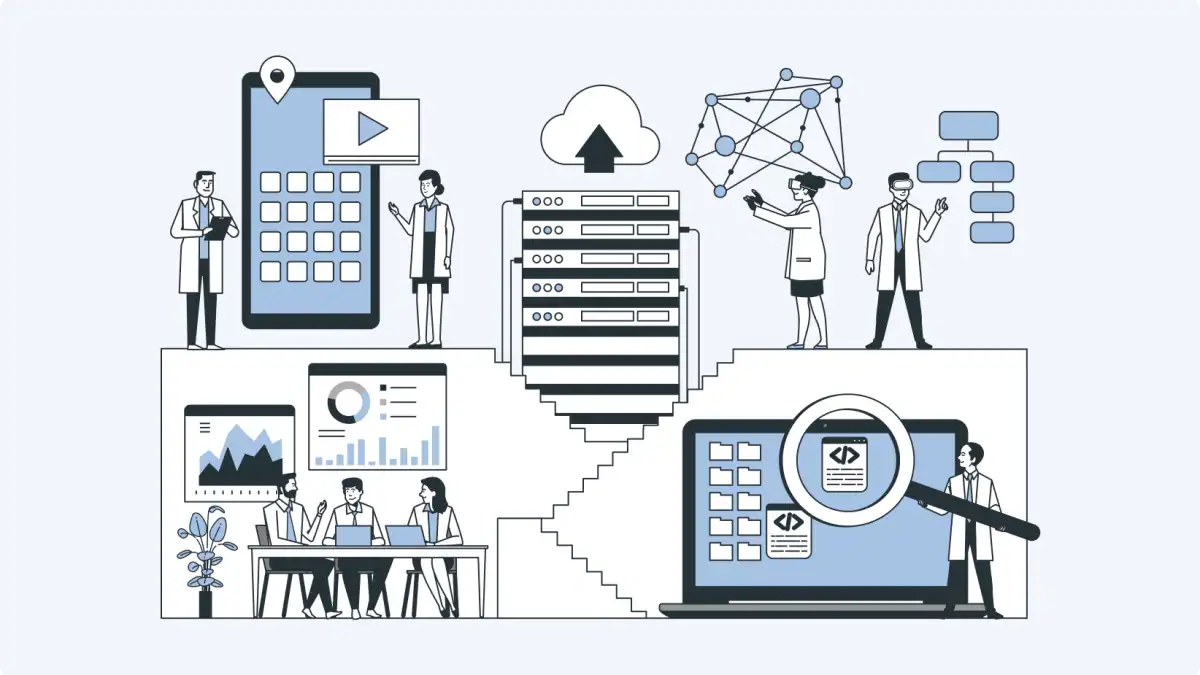
Let’s start with the basics: what do we actually mean when we talk about the MLS “tech stack”?
Think of the tech stack as the entire system of software, hardware, databases, integrations, APIs, and cloud services that work together to support the MLS platform. It’s the foundation that allows the MLS to:
- Store and manage listing data
- Authenticate users
- Deliver real-time market updates
- Handle large traffic loads
- Ensure compliance and secure data exchange
- Integrate with portals, CRMs, and public websites
- Provide analytics and reporting
Behind every fast-loading listing search page is an entire orchestra of technologies playing in sync.
2. The Core Database Layer: The Heart of the MLS
At the center of every MLS platform lies the database layer—the system responsible for storing property listings, transaction history, media files, geolocation data, and user accounts. This is the backbone of the MLS.
Relational Databases (SQL)
Most MLS platforms use relational databases like:
- PostgreSQL
- MySQL
- Microsoft SQL Server
These are powerful systems designed for structured data, allowing fast queries and consistent data integrity.
Why they’re ideal for MLS:
- Property records need structure
- Brokers rely on accuracy, and SQL enforces rules
- They support complex queries for filtering listings
- They ensure data consistency despite constant updates
NoSQL Databases (Supplementary Storage)
Modern MLS platforms often incorporate NoSQL databases (such as MongoDB or Cassandra) to store large, unstructured datasets.
These are used for:
- Photos and media files
- User behavior logs
- Search histories
- Market trend datasets
Both database types work together to provide flexibility, speed, and reliability.
3. The Cloud Infrastructure
Gone are the days when MLS platforms were hosted on physical servers that required constant maintenance. Today, the cloud powers everything.
Most MLS systems rely on high-capacity cloud providers, such as:
- Amazon Web Services (AWS)
- Google Cloud Platform (GCP)
- Microsoft Azure
Why cloud hosting matters for MLS:
- Automatic scalability during high-demand periods
- Secure backups and redundancy
- Faster loading speeds across regions
- Seamless updates without downtime
Cloud hosting also supports advanced computing needs like AI-powered pricing models and massive data indexing.
4. The Search Engine Layer: Making Property Search Instant
One of the most impressive parts of the MLS tech stack is the search engine technology—often powered by tools like Elasticsearch, Solr, or OpenSearch.
When brokers search for “three-bedroom apartments in a specific community under a certain price,” these search engines return results in milliseconds.
Key capabilities:
- Full-text search
- Geo-filtering
- Autocomplete and predictive search
- Ranking and relevance scoring
- Real-time indexing of new listings
This is the reason you can browse thousands of listings without waiting for pages to load.
5. APIs: The Glue That Connects Everything
APIs (Application Programming Interfaces) are essential for MLS systems because they enable communication between different platforms.
APIs allow:
- Portals to pull listings in real time
- Brokers to connect CRM systems
- Developers to integrate market data into dashboards
- Mobile apps to sync with the MLS backend
- Automated updates to listings across multiple platforms
Without APIs, the MLS would be a closed-off system. With them, it becomes a connected marketplace.
6. Data Standardization Tools
MLS systems rely on precise data formatting. A small inconsistency—like neighborhoods listed differently—can damage search accuracy.
This is why MLS platforms use:
- Data validation frameworks
- Field-standardization rules
- Automated quality checks
- Structured metadata tagging
- Compliance and formatting protocols
These tools ensure that the data brokers and buyers rely on is clean, complete, and consistently formatted.
7. Authentication, Security & User Access Layers
Security is non-negotiable. The MLS handles sensitive data, including seller details, transaction records, and private documents.
Key security components include:
Authentication Technologies
- OAuth 2.0
- Multi-factor authentication (MFA)
- Single Sign-On (SSO)
- Role-based access control
Data Encryption
- SSL/TLS for data in transit
- AES encryption for stored data
Threat Monitoring
- Intrusion detection systems
- Activity logs
- Automated anomaly detection
- Vulnerability scanning
Real estate professionals trust the MLS every day, and the tech stack is designed to keep that trust intact.
8. Media Handling: Images, Videos & Virtual Tours
Listings contain detailed visual content, and handling these files efficiently requires specialized systems.
MLS platforms typically use:
- Cloud-based object storage
- Image optimization tools
- CDN (Content Delivery Networks)
- Video compression systems
- 3D/virtual tour integration frameworks
This ensures that listing images load fast, even when accessed from different devices and regions.
9. The Front-End Application Layer: What Users Actually See
This is the user interface—the search pages, dashboards, and listing forms.
Technologies often used include:
- React
- Angular
- Vue.js
- Next.js
These frameworks offer:
- Smooth navigation
- Responsive design
- Fast loading
- Dynamic filtering
- User-friendly dashboards
The front end is where technology meets user experience, shaping how brokers and buyers interact with the MLS.
10. Machine Learning & AI Capabilities
MLS systems are increasingly adopting AI tools to enhance the market experience.
AI applications in the MLS:
- Automated property valuations (AVMs)
- Price prediction models
- Fraud detection
- Trend forecasting
- Similar property recommendations
- Image recognition for tagging listing photos
These features help users make more informed decisions—and they rely on advanced computing layers within the tech stack.
11. Data Warehouses & Analytics Engines
MLS platforms store enormous amounts of historical data.
To analyze it effectively, they use:
- Data warehouses
- ETL pipelines (Extract, Transform, Load)
- Business intelligence tools
- Market analytics dashboards
Developers and brokers can use this data to:
- Identify profitable communities
- Track price trends
- Plan launch timing
- Understand supply and demand shifts
- Study buyer behavior
This is where MLS transforms raw data into actionable insight.
12. Integration with External Systems
The MLS tech stack needs to communicate with countless external systems that support the real estate industry.
Examples include:
- CRM platforms
- Property portals
- Government property registries
- Developer systems
- Banking and mortgage tools
- Mapping services
- Geospatial APIs
A well-integrated tech stack ensures smooth data flow across the ecosystem, reducing errors and improving speed.
13. Performance Optimization & Caching
To keep the MLS fast, developers implement multiple performance techniques:
- Query caching
- CDN caching for images
- Load balancing
- Microservices architecture
- Horizontal scaling
These strategies allow the platform to handle thousands of simultaneous users.
14. Backup, Redundancy & Uptime Management
MLS systems must always be available.
Cloud-managed backup systems ensure:
- Automated nightly backups
- Cross-region redundancy
- Recovery plans
- Failover servers
This protects the system from interruptions and keeps the market moving.
Final Thoughts
Understanding the MLS tech stack gives brokers, buyers, and developers a new appreciation for the technology that powers market transparency and efficient property discovery. It’s not just a database—it’s a complex ecosystem of cloud services, search engines, security frameworks, APIs, and machine learning models working together to deliver a reliable and modern real estate experience.
When the tech stack works seamlessly, everyone benefits: faster searches, more accurate data, smoother transactions, and a marketplace built on trust. And as real estate continues to digitize, the MLS tech stack will only grow more powerful and more essential.
Frequently Asked Questions (FAQs)
1. Why does the MLS need such a complex tech stack?
Because it handles large volumes of data, high traffic, and real-time updates. A simple system wouldn’t be fast, secure, or scalable enough for modern real estate needs.
2. What technologies improve search speed on the MLS?
Search engines like Elasticsearch, caching systems, and optimized database queries allow users to browse thousands of listings instantly.
3. Is MLS data stored in the cloud?
Yes, most MLS platforms now rely on cloud hosting for scalability, security, and faster performance.
4. How does the MLS ensure data accuracy?
Through validation rules, standardization tools, continuous auditing, and strict formatting requirements.
5. Can developers integrate MLS data into their own systems?
Yes, most MLS platforms offer APIs that allow developers to integrate listing data into CRMs, websites, apps, and dashboards.