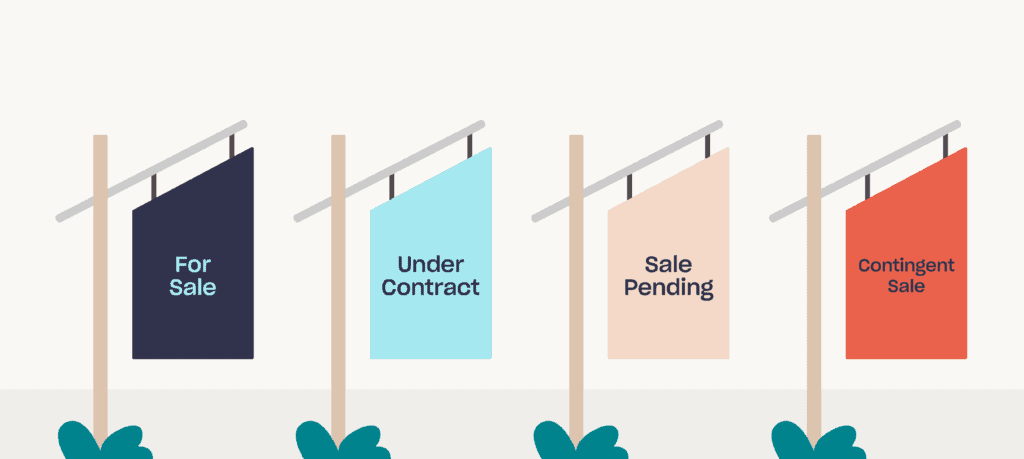
Why is it that in one MLS you see “pending,” in another you see “under contract,” and in a third you see “reserved” or “off-market”?
Why can’t MLS platforms simply agree on one shared dictionary that everyone uses? If you’ve ever felt confused by inconsistent MLS terms—whether you’re a broker, a buyer, or a developer—you’re not alone. Despite decades of digital transformation, real estate still speaks multiple dialects.
But here’s the surprising part: the lack of standardized terminology is not a mistake. In fact, it’s the result of deep structural, economic, and historical reasons that shape how MLS systems operate today.
In this article, we explore why MLS terminology is still fragmented, what these differences really mean, and how they affect accuracy, communication, and transparency in the market. By the end, you’ll understand the truth behind the lack of standardization—and how to navigate it more confidently as a real estate professional.
1. MLS Systems Were Built Locally, Not Nationally
If you trace the origins of MLS networks, you’ll find that most began as small, broker-led initiatives designed to support local markets—not national databases. Each region built its own property language because it needed terms that made sense for its specific market culture.
For example:
- Coastal cities needed terminology for waterfront zones, docks, and storm-resilient building features.
- Desert-region MLS platforms built terms for water rights, cooling systems, and sand-resistant architecture.
- Suburban markets prioritized school districts, HOA structures, and parking allocations.
Because each MLS grew around local realities, the terminology was shaped by local needs—not by a global standard.
When technology later tried to integrate these MLS systems into broader platforms, the “local dialects” stayed embedded within the database structures.
Standardizing those terms would require rewriting decades of historical data, retraining thousands of professionals, and restructuring countless contracts—making it extremely complex and expensive.
2. Real Estate Markets Are Too Diverse for One Vocabulary
Real estate is not a uniform industry. A property in one city can differ fundamentally from a property in another—structurally, legally, culturally, and monetarily.
This diversity affects terminology in several ways:
Market Type Differences
- Freehold markets use different terms than markets dominated by leasehold.
- Urban markets emphasize building classifications and access rights.
- Luxury markets require terminology for amenities, services, and property design standards.
Trying to force all these variations into a single list of terms would oversimplify the complexity of the industry.
Regulatory and legal differences
Terminology often exists because of local laws:
- What counts as “sold” varies between jurisdictions.
- “Pending” may mean contingencies are cleared in one region but still open in another.
- “Off-plan” exists in some markets but has no legal meaning elsewhere.
Because terminology serves local legal systems, standardization can actually create legal inaccuracies.
3. MLS Terminology Is Tied to Contracts and Local Regulations
MLS systems are not standalone platforms—they must match the language used in:
- listing agreements
- purchase contracts
- zoning regulations
- disclosure requirements
- government data structures
Once legal contracts adopt certain terms, the MLS must follow suit to remain compliant. And once that happens, those terms become extremely hard to modify.
For example:
- If a contract uses “contingent,” the MLS cannot simply switch the term to “pending” without rewriting legal documents.
- If local regulations require a property to be labeled as “occupied,” the MLS must use that exact word.
This legal dependency means standardization is not just a technical challenge—it’s a legal one.
4. MLS Data Models Are Not the Same Across Platforms
Behind every MLS system is a data model: a structure that defines how information is categorized, stored, and related.
Because each MLS system grew independently, its data models differ wildly. Some systems:
- separate residential and commercial categories
- treat land as a standalone class
- require mandatory fields for certain markets
- allow custom fields for builders or developers
- use different back-end technologies
Standardizing terminology would require standardizing database architecture—and that is an enormous engineering undertaking.
In many cases, older MLS systems were built decades ago, using early database structures that are difficult to modify without breaking compatibility.
5. Industry Stakeholders Rarely Agree on Terminology
Even when attempts at standardization are made, disagreements arise. Stakeholders often include:
- brokerage firms
- developers
- real estate associations
- government regulators
- MLS software providers
- valuation companies
- lenders and banks
Each stakeholder has a preferred set of terms based on:
- marketing strategy
- legal interpretations
- regional practices
- brand positioning
- customer communication styles
For example:
- Developers prefer terms like “reserved” or “on hold” because they sound more flexible.
- Brokers often use “under offer” because it’s familiar to clients.
- Some MLS systems use “withdrawn,” while others split it into “temporarily withdrawn” and “permanently withdrawn.”
When so many parties rely on different terms for business purposes, unifying them becomes a negotiation challenge.
6. Standardization Requires Money, Resources, and Time
Upgrading an MLS system is expensive. It involves:
- rewriting database structures
- updating user interfaces
- migrating existing listings
- retraining brokers and agents
- revising manuals and documentation
- integrating with portals, CRMs, and valuation systems
Because MLS platforms operate on tight budgets, many prioritize features that directly enhance listing visibility or increase transaction volume over linguistic uniformity.
In other words, standardization is rarely the top business priority.
7. Some MLS Platforms Prefer Custom Terminology for Competitive Advantage
Believe it or not, inconsistency can be intentional.
Some MLS providers develop unique terminology to differentiate themselves. This can help:
- position the platform as more advanced
- appeal to certain developers or brokers
- align with specific market strategies
Custom labels can make the system appear more specialized, even when the underlying concept is similar to those in other MLS platforms.
For example:
- “Reserved” may be introduced as a more buyer-friendly version of “under contract.”
- “Active Plus” might signal a property with enhanced visibility.
- “Verified Listing” could be a proprietary term indicating additional validation steps.
When terminology becomes part of the product identity, uniformity becomes even less appealing.
8. Data Exchange Standards Exist, But They Allow Flexibility
There are standardized frameworks, such as RESO (Real Estate Standards Organization), that attempt to unify data fields. But they intentionally allow regional flexibility.
Why?
Forcing all MLS systems to use identical terms would cause more problems than it solves.
RESO and similar standards focus on:
- interoperability
- data exchange formats
- structural consistency
They do not force MLS platforms to use identical user-facing terminology.
This strikes a balance between standardization and local accuracy.
9. Standardization Could Create Miscommunication
It may sound counterintuitive, but standardizing terminology could make communication worse—not better.
Imagine if all MLS systems were required to use “pending” instead of “under offer.” In some markets, this would misrepresent the legal status and confuse buyers.
Different terms often exist because they represent meaningful distinctions. Removing those distinctions in the name of standardization could:
- mislead buyers
- misinform brokers
- distort market reports
- violate legal definitions
- create disputes in transactions
The goal of the MLS is accuracy—not linguistic uniformity.
10. MLS Users Are Already Trained in Local Terminology
Brokers, developers, and buyers quickly learn the terminology of their local MLS. Because the majority of transactions are local, the lack of standardization rarely causes serious confusion within the market.
The problem mainly arises when professionals operate across multiple regions—such as developers expanding to new cities or brokers working with international investors.
For them, inconsistent terminology can slow down decision-making and create misunderstandings.
But within a local MLS, familiarity often makes standardization less necessary.
11. Technology Is Moving Toward Translation, Not Standardization
Instead of standardizing terminology, the modern trend is to translate terminology automatically.
Advanced MLS systems are introducing features like:
- automated term mapping
- synonym recognition
- machine-learning-based classification
- user-friendly labels that explain the legal meaning
- glossary tools or hover definitions
This approach allows systems to maintain local accuracy while still improving clarity for cross-region users.
In the future, brokers may not need standardized terminology—they will have smart interfaces that clarify meanings automatically.
12. Should MLS Terminology Ever Be Standardized?
This raises a fair question: would uniform terminology help or hurt the industry?
There are benefits, such as:
- easier data comparison
- smoother national reporting
- simpler cross-border transactions
- faster onboarding for agents
But the downsides remain significant:
- loss of local legal accuracy
- costly system overhauls
- stakeholder disagreement
- data mismatches
- complications for international listings
Most experts believe full standardization is unrealistic and unnecessary. Instead, enhanced clarity, improved definitions, and smarter interfaces will shape the future of MLS communication.
Conclusion
The real reason MLS systems don’t standardize terminology has nothing to do with inefficiency or disorganization. It’s the natural result of:
- local market differences
- legal diversity
- historical system development
- business preferences
- technological limitations
- stakeholder disagreements
- the need for precise, accurate terminology
Standardization sounds simple—but in practice, it would disrupt legal structures, confuse professionals, and cost millions to implement.
Rather than forcing all MLS platforms to speak the same language, the industry is now moving toward tools that translate and explain terminology without erasing local nuance.
For brokers, buyers, and developers, understanding these differences is key to navigating listings with greater confidence and fewer misunderstandings.
FAQs
1. Why do MLS systems use different labels for similar property statuses?
Because each MLS was built independently to match local laws, market norms, and contract language. The terminology reflects local realities, not a national standard.
2. Would standardizing terminology make real estate data easier to compare across regions?
Yes, but it would come with significant downsides, including legal inconsistencies, system overhauls, and loss of local nuance. The industry prefers translation tools over full standardization.
3. Is inconsistent terminology harmful for buyers and investors?
Not necessarily. Within a local market, brokers understand the terminology clearly. Problems mainly arise when comparing listings across different regions or MLS systems.
4. Why don’t MLS providers agree on one unified dictionary?
Because stakeholders—brokers, regulators, developers, and MLS vendors—often have different needs, legal contexts, and business strategies, making agreement incredibly difficult.
5. Will MLS terminology ever become standardized?
Full standardization is unlikely. Instead, MLS systems are moving toward smart interfaces that interpret, translate, and clarify terms automatically for users across regions.