Why Your MLS Systems Just Can’t Get Along
Picture this scenario: You are sitting with a client who just moved to Cairo from Chicago. They are looking for a “condo.” You nod, open your laptop, and start searching. But in our local system, we don’t really use the word “condo” the way they do in the States. We have “apartments,” “duplexes,” and “studios.” So, you type in “apartment.”
Suddenly, your search results are flooded with everything from a 50-meter bachelor pad to a sprawling 400-meter floor in a high-rise. The client is frustrated. You are annoyed. The software feels broken.
This right here is the heart of the MLS data normalization problem.
If you have ever wondered why real estate apps sometimes show the wrong number of bathrooms, or why a property listed as “active” on one site shows up as “sold” on another, you are looking at a failure of normalization. It is the single biggest technical headache in our industry, and for those of us trying to connect buyers with sellers across different regions—or even different neighborhoods—it is a daily battle.
Let’s dig into why teaching these computers to talk to each other is harder than navigating the 6th of October Bridge during rush hour.
Why Your “Three Bedrooms” Might Be Someone Else’s “3 BD”
At its core, data normalization is just translation. It is the process of taking messy, inconsistent data from various sources and organizing it into a standard format so a single search bar can read it all.
Sounds simple, right?
The problem is that real estate is intensely local. As an agent in Egypt, I measure everything in square meters. If I try to share data with a platform based in the US or UK, their system is screaming for square feet. If the computer isn’t told exactly how to convert that math instantly, a 200-meter apartment suddenly looks like a 200-foot closet to an American buyer.
This gets even stickier with room definitions. In some MLS systems, a “bedroom” legally requires a window and a closet. In others, if you can fit a bed in it, it counts. When you try to merge these two databases, the computer throws a tantrum. It doesn’t know which definition to trust. This is why you often see listings with “0 Bedrooms” or conflicting information; the system gave up trying to translate the nuances.

When You Are Fighting Decades of Old Technology
We need to talk about the elephant in the room: the software itself. Many MLS organizations are running on technology that was built before the iPhone existed.
In the tech world, we call these “legacy systems.” They were built in silos. The MLS in one governorate or county built its database one way, and the MLS in the neighboring region built its database completely differently.
One system might have a field called Zoning_Type, while the other calls it Prop_Zone_Code. One uses text; the other uses numbers. One requires you to fill it out; the other makes it optional.
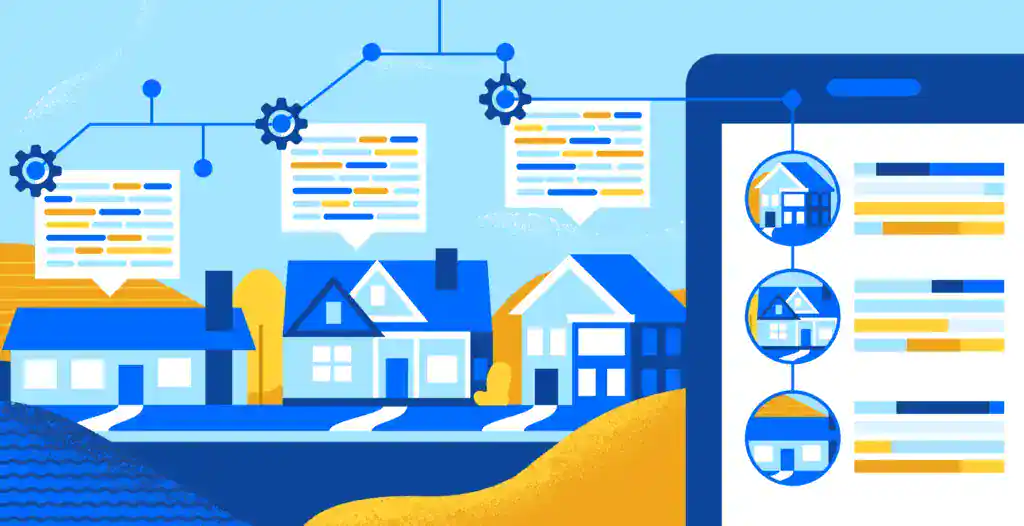
Now, imagine a tech company like Zillow, or a local giant like PropertyFinder, trying to pull listings from both of those systems to show a user a map of the whole country. To make that happen, engineers have to write custom code to “map” every single field from System A to System B. It is the digital equivalent of trying to fit a square peg into a round hole, over and over again, for thousands of different fields.
How Your Creativity Sabotages the System
We realtors are salespeople. We love to use creative language to make a property sound appealing. But our creativity is a nightmare for data normalization.
I have seen agents list a “garden level” apartment. Is that a basement? Is it a ground floor? Is it a first floor? The answer changes depending on who you ask.
If you enter “Garden Level” into a text field, a search engine looking for “Ground Floor” will likely miss it. This is unstructured data. The more free-text fields an MLS allows, the harder it is to normalize that data later.
In Egypt, this is rampant. We might list a property’s location as “second row from the sea.” That is a great description of a human. It paints a picture. But a computer database wants coordinates or a specific “Waterfront: Yes/No” tag. When we type descriptions into fields meant for hard data, we break the normalization process. We create “dirty data” that requires a human to go in and fix it, which slows everything down.
The Struggle to Speak One Universal Language
You might be asking, “Why doesn’t everyone just agree to use the same forms?”
That is the billion-dollar question. There is an organization called the Real Estate Standards Organization (RESO) that is working hard to create a “Data Dictionary”—basically a universal language for real estate. They want everyone to agree that “bathrooms full” means a sink, toilet, and bathtub/shower, and that it should always be written exactly like that.
But getting hundreds of different MLS providers, listing portals, and brokerages to switch their entire backend systems to this new standard is expensive and time-consuming. It is like trying to convince the entire world to stop speaking their native languages and start speaking only Esperanto tomorrow.
Plus, there is a protective element. Some MLS boards feel that their data is their proprietary gold. They make it intentionally difficult to scrape or standardize because they want to keep users inside their specific ecosystem. If they make the data too easy to normalize, they worry they will lose their competitive edge to big third-party portals.
What Happens to Your Deals When Data Breaks
Why should you, the agent, or the buyer care about backend database issues? Because it costs you money.
When data isn’t normalized correctly, “Search Precision” drops. We talked about AEO (Answer Engine Optimization) earlier; well, normalization is the fuel for that. If a user asks Google, “Find me a home with a mother-in-law suite in Cairo,” the AI can only answer that question if the “Mother-in-Law Suite” data tag is standard across all the listings it looks at.
If half the agents called it a “guest house” and the other half called it an “annex,” the AI fails. The buyer doesn’t see your listing. The deal never happens.
Furthermore, poor normalization leads to distrust. If a client sees a listing price of “1,000,000” but the currency field didn’t normalize correctly, they might think they are looking at dollars when they are looking at pounds (or vice versa). That creates friction. In our business, friction kills deals.
Where We Go From Here
The good news is that the pressure is on. The big portals and the demand for AI-driven search are forcing MLS providers to clean up their act. We are seeing a slow but steady move toward API-based data feeds, which are much cleaner than the old methods of bulk data transfer.
But until we reach that holy grail of universal standards, the burden falls partially on us. We have to be diligent about how we input our data. We have to understand that the fields we fill out aren’t just administrative busywork; they are the digital coordinates that help buyers navigate the map to our doorstep.
So, the next time your MLS system forces you to pick from a dropdown menu instead of letting you type your own description, don’t get frustrated. That restriction is actually helping you. It is ensuring that your “Chalet” is seen by the person looking for a “Chalet” and not getting lost in a sea of “Cabins,” “Cottages,” and “Beach Houses.” It is a messy, complicated world behind the screen, but it is the only way to make the market make sense.