Have you ever searched for a property online and realized that the list view simply didn’t tell the full story?
If so, you’re not alone. In today’s real estate landscape—where speed, accuracy, and localized insight determine who wins the best deals—the MLS map view has become one of the most powerful tools for brokers, buyers, and developers alike.
While list view has traditionally been the go-to format for browsing properties, the map view is now shaping decision-making in ways a simple list never could. Beyond displaying properties on a page, it unlocks context, geography, competitive intelligence, pricing trends, and spatial relationships that influence nearly every outcome in a real estate transaction.
This article explores why map-based search within an MLS has become more influential than list-based search, how it changes buying and selling strategies, and why understanding location visually often leads to better decisions and better deals.
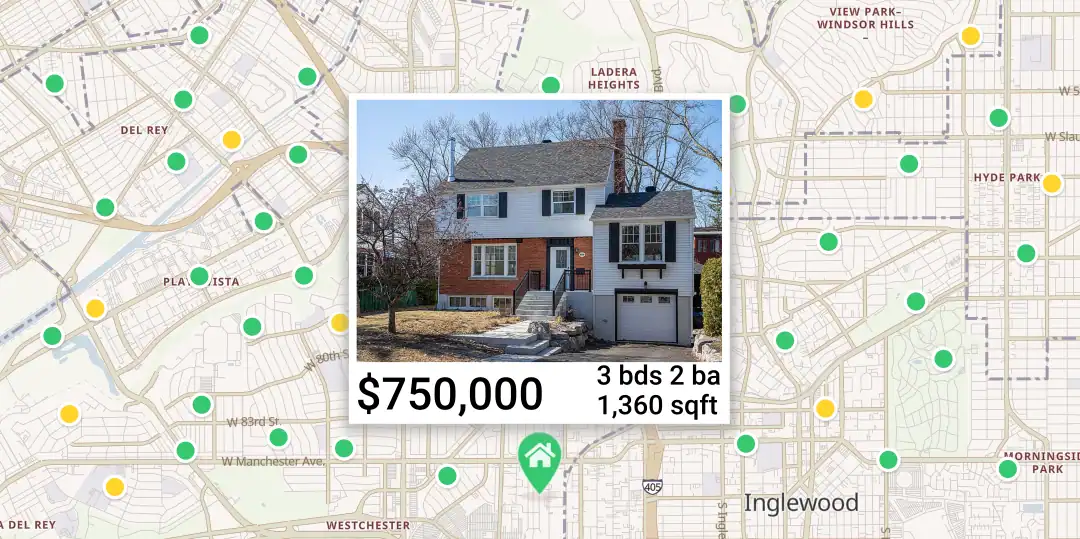
1. The Limitations of List View: Why It’s No Longer Enough
List view had its moment—simple, organized, and familiar. But as markets grew more competitive and user expectations evolved, its weaknesses became obvious.
No Spatial Awareness
A list can show prices, square footage, and a few features, but it cannot show:
- How far a property is from a school
- Whether it’s on a main road or inside a quiet residential pocket
- How close it is to a competitor listing
- Whether the neighborhood is changing or stable
These elements matter deeply, yet the list view hides them.
Hard to Compare “Context Value”
Two properties may look identical in list view: same price, same size, similar style.
But on a map, one could be next to a park and the other next to a noisy highway.
Only one is truly worth the price.
Limited Decision Speed
List view forces users to open multiple tabs, switch screens, and manually compare listings.
This slows down decision-making—especially problematic when desirable properties get offers within hours.
2. Why Map View Changes Everything
Map view doesn’t just enhance the search experience—it transforms it. It gives brokers and buyers a fuller, more intuitive understanding of what they’re evaluating.
Location Intelligence in Real Time
Map view overlays listings onto geography, revealing patterns you can’t detect in a list:
- Clusters of active listings
- High-demand pockets
- Neighborhood boundaries
- Development corridors
- Pricing gradients from one street to another
This spatial intelligence helps professionals spot opportunities and risks instantly.
A More Natural Way Humans Process Information
People think in places, not in spreadsheets.
When someone wants a home or investment, the first question is usually where, not what.
Map view mirrors real-world navigation—it feels intuitive, visual, and human.
Immediate Understanding of Surroundings
Map view gives instant clarity about:
- Proximity to services: malls, clinics, schools, parks
- Access to main roads and transportation
- Traffic patterns based on street structure
- Neighborhood character and density
This context is invaluable—especially for buyers unfamiliar with an area.
3. How Map View Helps Brokers Close Faster
For brokers, map view is more than convenience—it’s a competitive advantage.
Faster Client Qualification
When clients see properties on a map, they quickly identify:
- Preferred neighborhoods
- Streets they don’t want
- Areas beyond their price comfort
- Zones with too many or too few listings
This shortens the search process and accelerates shortlisting.
Better Property Matching
Map view lets brokers match properties to client needs more accurately.
For example, if a client wants “close to schools but away from busy roads,” a broker can visually eliminate unsuitable areas immediately—something a list view can’t do without extensive manual work.
Stronger Negotiation Arguments
Brokers can use map data to justify pricing:
- “This home is priced lower than three nearby listings.”
- “There’s no competition within this micro-location.”
- “Prices rise as you move closer to the waterfront.”
Map analytics turns negotiation into strategy.
4. Why Map View Matters to Buyers More Than Ever
Today’s buyers are more data-driven, tech-savvy, and expectation-heavy than ever.
Map-based search gives them confidence in ways list view never could.
Seeing the Bigger Picture
Buyers want to know:
- What’s around the property
- Whether the community is established or emerging
- How far do they need to commute
- Where commercial zones begin and end
Map view provides all of this upfront, reducing uncertainty.
Understanding True Value
A property priced at $500,000 may be a bargain in one block and overpriced in another.
Map view highlights:
- Local price trends
- High-value streets
- Areas expected to appreciate
- Transition zones
This helps buyers avoid overpaying and spot undervalued gems.
Eliminating “Surprise Factors”
List view hides factors such as:
- Adjacent industrial zones
- Noise from nearby highways
- Empty lots that may turn into construction sites
- Limited access points in gated communities
Map view exposes these realities before the first site visit.
5. Developers Gain the Most from Map-Based Search
Developers rely heavily on geographic context. Map view delivers insights that influence project selection, design, and pricing strategy.
Identifying Gaps in the Market
Developers can pinpoint areas where:
- Inventory is low
- Demand is rising
- Competitors are concentrated
- Land is still available
This helps them choose project locations that maximize ROI.
Analyzing Long-Term Value
Map view reveals growth corridors—areas where infrastructure or population expansion is heading.
This makes it easier to predict appreciation and future demand.
Studying Neighborhood Dynamics
Developers can assess:
- Density
- Accessibility
- Amenities
- Traffic impact
- Surrounding land use
These insights refine project plans and support strategic positioning.
6. Map View Offers Micro-Location Intelligence (The Real Secret)
In real estate, micro-location can outweigh size, amenities, and even price.
Two homes on the same street can have drastically different values depending on exact positioning.
Map view reveals:
Which Side of the Street Is More Valuable
One side may have:
- Better views
- Less sun exposure
- Quieter access
- Greater privacy
List view cannot detect this level of nuance.
Property Position in a Community
Buyers care about:
- Corner lots
- Park-facing units
- Proximity to gates
- Distances to shared facilities
Map-based search makes these factors visible immediately.
Street-Level Dynamics
Urban blocks differ dramatically. Map view captures:
- Width of the street
- Architectural harmony
- Street quality
- Road connectivity
Brokers and buyers can assess value before stepping foot on-site.
7. Better Comparisons, Better Decisions
Comparing properties in list view usually leads to confusion and second-guessing.
Map view simplifies comparisons dramatically.
Visual Clarity on Pricing
Users can see price tags relative to geography:
- Why is one property more expensive?
- Why is another priced so low?
- Are there pricing clusters?
Spatial pricing reveals both opportunities and red flags.
Filtered Comparisons
Buyers can filter by:
- Budget
- Bedrooms
- Property type
- Square footage
Then instantly see how many matching options exist in each area.
Competitive Landscape View
Brokers view competition among listings:
- Areas oversupplied = more negotiation power
- Areas undersupplied = higher demand
Map view transforms competition from guesswork into actionable insight.
8. Map View Improves the Quality of Site Visits
A powerful but often overlooked benefit is how map-based search improves physical property tours.
Efficient Route Planning
Map view enables brokers to organize visits:
- By proximity
- By cluster
- By logical geographic flow
This reduces time wasted criss-crossing neighborhoods.
Setting Expectations Before Arriving
Buyers see:
- Surroundings
- Road access
- Layout of the street
Meaning fewer surprises and more productive visits.
Higher Quality Leads
Clients who choose properties via map view tend to:
- Understand neighborhoods better
- Have clearer preferences
- Cancel less frequently
This streamlines transactions for brokers and sellers.
9. Why Map View Builds Trust
Trust is everything in real estate—and map view enhances transparency.
Nothing Is Hidden
Buyers can see:
- Accurate distances
- Nearby amenities
- Public facilities
- Neighboring structures
Clarity builds confidence.
Reduces Misinterpretation
List view descriptions can be ambiguous.
Map view removes guesswork and allows buyers to verify information independently.
Supports Honest Selling Practices
When everything is visible upfront, the buyer’s expectations align with reality.
This reduces disputes and strengthens relationships.
10. The Future of Real Estate Search Is Spatial
Every trend points toward map-based search becoming the new standard:
- Buyers want contextual information
- Brokers need tools that close deals faster
- Developers rely on geographic analytics
- Users demand smarter, more interactive experiences
List view will remain useful—but map view is rapidly becoming the dominant decision-making interface.
Conclusion
Map view is more than a modern convenience—it’s a transformative shift in how real estate professionals understand, compare, and evaluate properties. It delivers clarity that list view cannot, allowing brokers, buyers, and developers to make smarter decisions with greater speed and confidence.
As markets become more competitive and data-driven, the ability to visualize properties spatially will be one of the most important skills in real estate. Map view doesn’t just show listings; it reveals value, opportunity, and context—all essential for informed transactions.
FAQs
1. Is map view better for all types of real estate searches?
Yes. Whether you’re searching for residential, commercial, or land opportunities, map view gives essential geographic context that list view cannot provide.
2. Does map view help buyers avoid overpaying?
Absolutely. Map view exposes micro-location differences, pricing patterns, and neighborhood dynamics, helping buyers assess whether a property’s price aligns with its surroundings.
3. How does map view support brokers?
Brokers use map view to qualify clients faster, match them to neighborhoods, plan site visits efficiently, and build stronger negotiation arguments.
4. Why is map view valuable for developers?
Developers rely heavily on geographic insights. Map view reveals supply gaps, growth corridors, infrastructure influence, and long-term value trends.
5. Will list view ever disappear completely?
No. List view still helps with quick scanning and sorting. However, map view is becoming the primary decision interface because it shows the full picture—not just the property details.